

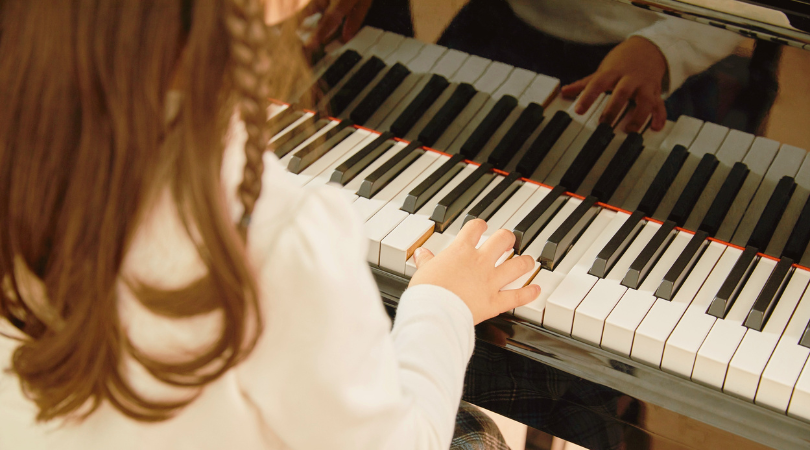
At Wholesome Harmonies, adapted music lessons are one of our most popular offerings.
All of our music teachers are board certified music therapists who specialize in working with students with special learning needs.
So whereas a traditional music teacher might expect the student to sit at the piano for the full 30 min lesson, we have training and experience working with students of all abilities, and have strategies to help those students feel successful learning a musical instrument.
One of the things we need to keep in the forefront of our mind is student retention, or preventing student drop out.
Playing a guitar can be painful when you are first learning, before you have built up calluses.
Learning to read sheet music for piano can be frustrating when there are so many new signs and symbols to learn.
We want students to get over those hurdles so they can successfully play the instrument they want to learn.
Here are three strategies to help prevent lesson drop out and keep students engaged in learning.
1. Dig deep into the music your student likes and use that as lesson material. Lesson and theory books are important. They provide a solid foundation for learning the language of music. But bringing in music that the student loves is the key to keeping them engaged.
I use the Alfred lesson and theory books for my beginner students. But in addition to that, I supplement with sheet music for whatever music they like. For one student it was The Legend of Zelda: Breath of the Wild. I went onto YouTube and listened to the song on repeat while I notated it. For another student, it was “Good Directions” by Billy Currington and “Check Yes or No” by George Strait. These songs kept the students excited about lessons and made them take the initiative to sit down and practice – because they wanted to!
2. Use musical games. Create a musical games like Go Fish or Memory for students to learn note names and musical symbols. Step by step instructions for those games are here. These games are a great way to get students up off the piano bench or lesson chair, moving around, and engaged in something creative and fun.
3. Show them what they’re working toward. When a student is knee deep in theory books, it’s hard for them to keep in mind the end result they’re working toward. I love to play recordings of accomplished musicians and invite them out to live concerts where they can see performers up close and interact with them after the concert. The awe they feel when listening to those performances often gives the student the motivation they need to press through the challenging moments of learning an instrument.
Use these techniques to keep your students engaged and enjoying their lessons. I’ve got lots more adapted music lesson inspiration here on the blog.
And if you’d like to work with me one on one, I offer consultations on customized adapted music lessons for students with autism and related disabilities.


Leave A Comment